

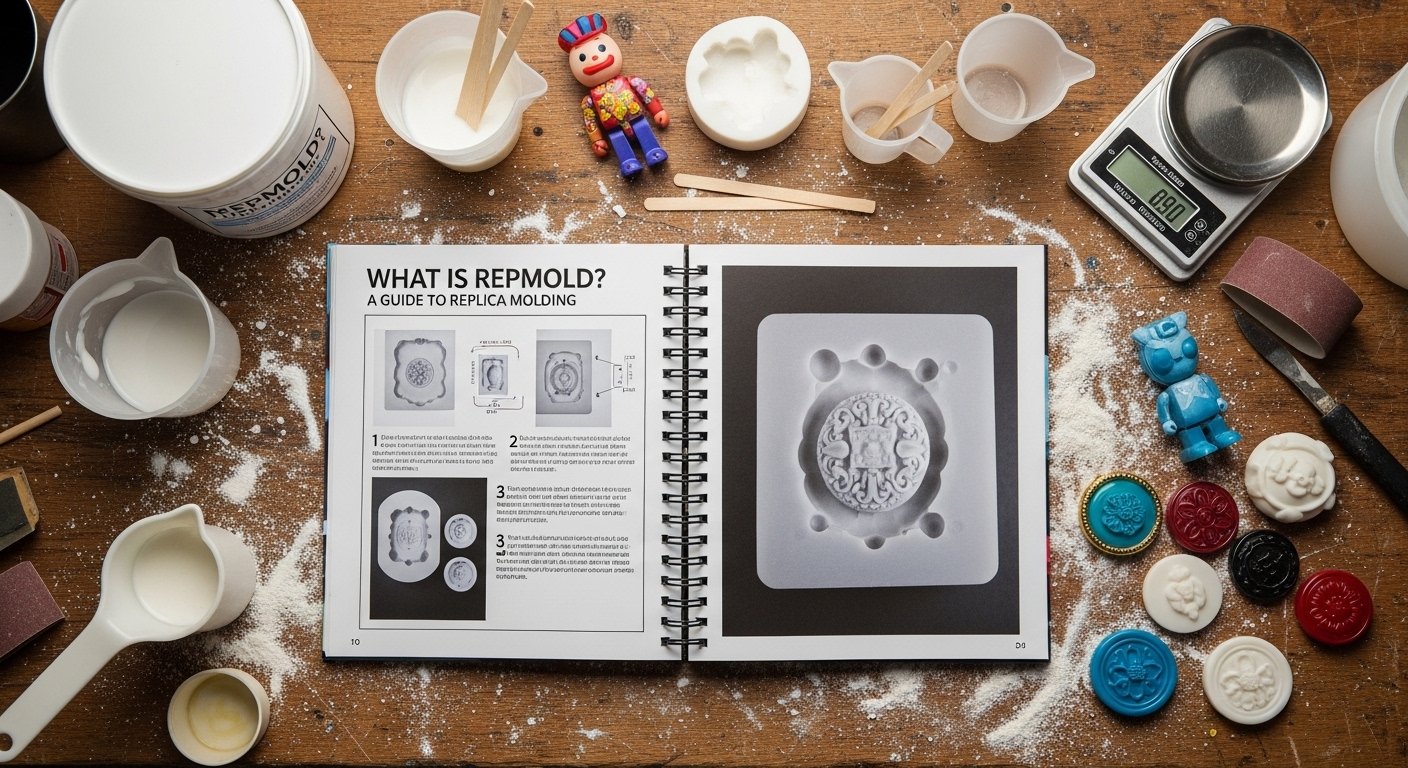
Manufacturing precise components requires reliable techniques that balance accuracy with cost. Engineers and designers constantly look for ways to replicate intricate patterns without spending a fortune on heavy machinery. This search often leads them to a highly effective process known as replica molding, frequently shortened in industry circles to repmold.
Repmold involves creating an elastomeric stamp or mold from a master template. This soft mold can then be used to transfer complex, micro-scale, or even nano-scale patterns onto various materials. It serves as a cornerstone of soft lithography, allowing laboratories and industrial manufacturers to produce high-fidelity duplicates quickly.
By reading this guide, you will gain a clear understanding of the repmold process. We will explore its primary features, examine how the methodology works step-by-step, and highlight the industries relying on this technology to drive innovation.
Key features and benefits of repmold techniques
Replica molding stands out among manufacturing processes for several compelling reasons. Companies adopt this method because it solves specific scaling and precision problems that traditional photolithography or hard machining cannot easily address.
High-fidelity precision
The elastomeric materials used in repmold—most commonly polydimethylsiloxane (PDMS)—can conform seamlessly to the microscopic contours of a master template. This allows the mold to capture features down to the nanometer scale. When you cure a liquid polymer inside this mold, the resulting replica mirrors the original master with astonishing accuracy.
Cost-effective scaling
Traditional manufacturing techniques often require expensive cleanrooms, high-energy lasers, or harsh chemicals. Repmold bypasses many of these requirements. Once the initial master template is created, you can cast dozens or even hundreds of soft molds from it. Each soft mold can subsequently produce numerous replicas, drastically lowering the cost per unit.
Material versatility
Engineers can use soft molds to cast a wide variety of materials. You are not limited to just one type of plastic. You can cast optical polymers, hydrogels, ceramics, and even certain types of biological materials. This flexibility makes replica molding highly attractive to multidisciplinary research teams and commercial product developers.
How the repmold process actually works
Understanding the mechanics of replica molding helps clarify why it is so effective. The process generally follows a straightforward sequence, though specific parameters like temperature and curing time vary based on the materials involved.
Step 1: Fabricating the master template
Everything starts with a master template. Manufacturers typically create this master using high-precision techniques like photolithography or electron beam lithography on a silicon wafer. This step requires specialized equipment, but it only needs to be done once per design. The master contains the exact positive relief of the desired final structure.
Step 2: Casting the elastomeric mold
Next, operators pour a liquid pre-polymer over the master template. PDMS is the industry standard because it has low surface energy, meaning it will not permanently stick to the master. The liquid seeps into every tiny crevice of the template. The setup is then placed in a vacuum chamber to remove any trapped air bubbles that could ruin the mold’s structural integrity.
Step 3: Curing and peeling
The liquid polymer must be cured to solidify. This is usually achieved by applying gentle heat in an oven for a specific duration. Once the polymer hardens into a rubbery solid, an operator carefully peels it away from the master template. This soft mold now contains a negative imprint of the original microscopic design.
Step 4: Creating the final replica
Finally, the soft mold is filled with the desired casting material, such as a liquid polyurethane or an optical resin. After this new material cures, it is separated from the soft mold. You now have a perfect, high-fidelity replica of the original master.
Major applications in modern industry
The ability to easily duplicate microstructures has transformed several advanced fields. Repmold is not just a laboratory curiosity; it is an active manufacturing tool used to create real-world products.
Microfluidics and diagnostic devices
The biomedical sector relies heavily on replica molding to manufacture microfluidic chips. These chips contain tiny channels that manipulate small volumes of liquids, such as blood or chemical reagents. Because repmold allows for the cheap and rapid production of these channels, companies can manufacture disposable, point-of-care diagnostic devices that deliver rapid medical test results.
Optics and photonics
Optical components require incredibly smooth surfaces and precise geometries to manipulate light correctly. Manufacturers use replica molding to create microlens arrays, diffraction gratings, and anti-reflective surfaces. The high fidelity of the elastomeric molds ensures that the final optical products do not suffer from light-scattering defects.
Wearable technology and flexible electronics
As electronics move away from rigid silicon boards, replica molding offers a way to print conductive patterns onto flexible substrates. Engineers use soft molds to pattern conductive polymers or liquid metals. This capability is essential for developing wearable health monitors, smart clothing, and bendable display screens.
Next steps for implementing replica molding
Adopting repmold technology can significantly streamline your prototyping and manufacturing workflows. The process provides an elegant solution for scaling up the production of micro- and nano-structured devices while keeping overhead costs manageable.
To get started, evaluate your current manufacturing bottlenecks to see if soft lithography can provide a more efficient alternative. Consult with materials scientists to select the appropriate elastomers and casting resins for your specific application. By integrating replica molding into your operations, you can accelerate your product development cycles and bring high-precision innovations to market faster.