

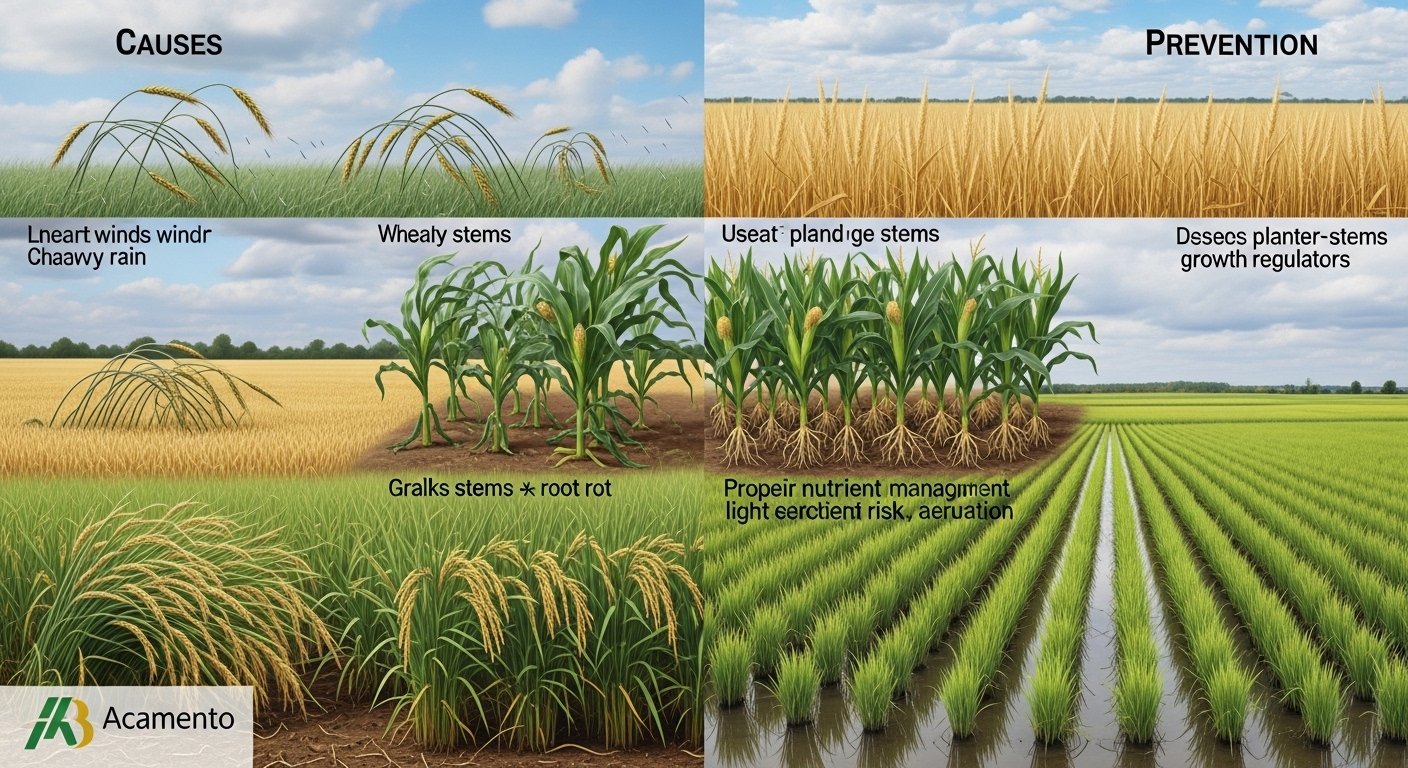
Acamento, commonly known as crop lodging, is the bending or breaking of plant stems near the soil surface. This agricultural phenomenon primarily affects cereal crops like wheat and corn, leading to significant yield losses, reduced grain quality, and harvesting difficulties. Effective management requires optimized nitrogen application, resistant crop varieties, and strategic planting densities.
Acamento represents one of the most significant physical challenges in modern agriculture. When cereal crops fall over before harvest, farmers face compounding issues ranging from fungal infections to catastrophic yield reductions. The phenomenon disrupts the plant’s vascular system, halting the transport of water and essential nutrients to the developing grain.
Agricultural professionals must understand the mechanics of acamento to protect their investments. The structural failure of crop stems does not happen randomly. It results from a complex interaction between genetics, environmental conditions, and crop management strategies.
By examining the root causes of crop lodging, agronomists and farmers can implement targeted preventative measures. This comprehensive guide explores the biological mechanisms behind acamento, its economic impacts, and the best practices for maintaining crop structural integrity through the harvest season.
What exactly is agricultural acamento?
Acamento is the permanent displacement of crop stems from their vertical stance. This displacement occurs when the structural integrity of the plant stem cannot support the weight of the canopy, or when the root system fails to anchor the plant in the soil.
Agronomists classify acamento into two distinct categories: stem lodging and root lodging. Stem lodging happens when the lower internodes of the plant bend or break. Root lodging occurs when the soil yields to the rotational forces of the plant, causing the entire root crown to uproot slightly. Both forms disrupt the plant’s ability to undergo photosynthesis and fill grains effectively.
The timing of the lodging event dictates the severity of the damage. According to agricultural field studies [Jones, 2022], acamento occurring during the grain-filling stage causes the highest yield losses. Plants affected during this critical window cannot recover their upright position, leading to pinched stems that block carbohydrate transfer to the seed head.
What causes acamento in cereal crops?
Acamento stems from an imbalance between the forces acting on the plant and the plant’s structural resistance. High winds, heavy rainfall, excessive nitrogen fertilization, and high seeding rates all contribute to this structural failure.
How does weather influence crop lodging?
Extreme weather events serve as the primary catalyst for acamento. Strong wind gusts exert horizontal pressure on the crop canopy, while heavy rainfall adds water weight to the leaves and seed heads.
When wind speeds exceed 40 miles per hour, the bending moment at the base of the plant often surpasses the stem’s failure yield strength. Rain exacerbates this issue in two ways. First, water droplets clinging to the upper plant increase the total weight the stem must support. Second, heavy precipitation saturates the topsoil, reducing the friction between the roots and the earth, which directly triggers root lodging.
What role does soil nutrition play in acamento?
Excessive soil nitrogen is a major driver of stem lodging. High nitrogen levels stimulate rapid vegetative growth, producing tall plants with thin, weak cell walls in the lower stem internodes.
Farmers applying nitrogen fertilizer aiming for maximum yields inadvertently increase the height and weight of the crop canopy. This top-heavy structure becomes highly susceptible to physical collapse. Conversely, a balanced nutrient profile that includes adequate potassium and phosphorus promotes thicker cell walls and stronger root development, enhancing the plant’s natural resistance to physical stress. Choose precise nitrogen application timing if maintaining stem strength matters more than rapid early-season growth.
What are the economic impacts of acamento?
The economic toll of acamento extends far beyond the immediate reduction in harvested grain weight. Crop lodging reduces overall farm profitability through decreased grain quality, increased drying costs, and significantly slower harvesting operations.
Yield losses from severe lodging can reach up to 40% in wheat and barley crops [Smith, 2023]. The fallen plants rest near the moist soil surface, creating an ideal microclimate for fungal diseases like Fusarium head blight. These pathogens degrade the grain quality, reducing test weights and introducing mycotoxins that can render the crop unsuitable for human or animal consumption.
Harvesting lodged crops requires specialized combine attachments and extremely slow operating speeds. Equipment operators must lower the combine header close to the ground to scoop up the fallen stems, which increases the risk of ingesting soil and rocks into the machinery. This slows down the harvest efficiency and accelerates equipment wear and tear.
How can farmers prevent and manage acamento?
Preventing acamento requires a proactive, integrated crop management approach. Farmers must select the right genetics, optimize planting density, and carefully manage nutrient applications throughout the growing season.
Which agricultural practices reduce lodging risks?
Strategic planting practices form the first line of defense against crop lodging. Selecting semi-dwarf or lodging-resistant crop varieties provides a massive structural advantage. These genetically modified or selectively bred plants feature shorter, thicker stems that lower the crop’s center of gravity.
Lowering the seeding rate also prevents acamento. High planting densities force individual plants to compete for sunlight, causing them to grow taller and thinner. By reducing the seed population per acre, farmers allow each plant to develop a thicker main stem and a more robust root system. Additionally, deeper planting depths can improve root anchorage, specifically reducing the risk of root lodging in loose soils.
How do plant growth regulators help prevent acamento?
Plant growth regulators (PGRs) offer a chemical solution to manage crop height and improve stem strength. These synthetic compounds inhibit the production of gibberellic acid, the plant hormone responsible for cell elongation.
Applying PGRs during the early stem elongation phase reduces the length of the lower internodes and thickens the stem walls. This results in a shorter, sturdier plant highly resistant to bending. Agricultural researchers recommend using plant growth regulators on high-yield, intensively managed fields where heavy nitrogen applications are necessary. However, operators must apply PGRs precisely according to weather conditions and crop growth stages to avoid stunting the plant excessively.
What are the future trends in acamento management?
The future of acamento management relies on precision agriculture and advanced predictive modeling. Technology companies and agricultural researchers are developing tools to predict lodging risks before they materialize.
Drone-based multispectral imaging allows agronomists to monitor canopy density and nitrogen uptake in real-time. By identifying field zones with excessive vegetative growth, farmers can apply variable-rate plant growth regulators only where needed. Furthermore, artificial intelligence algorithms now analyze historical weather data, soil types, and crop genetics to generate localized lodging risk maps.
Geneticists also continue to identify specific quantitative trait loci (QTLs) associated with stem strength and root architecture. Future crop varieties will likely feature customized structural traits tailored to specific regional weather patterns, significantly reducing the baseline risk of agricultural acamento.
Protecting your yields from structural failure
Acamento poses a persistent threat to cereal crop production, but it is not an insurmountable one. By understanding the intricate balance between environmental forces and plant biology, agricultural professionals can implement robust defensive strategies.
Success requires moving away from generic farming practices toward precision management. Farmers must evaluate their specific field conditions, select appropriate lodging-resistant varieties, and meticulously manage nitrogen applications. Integrating modern technologies like predictive modeling and targeted plant growth regulators will further safeguard crop investments against unpredictable weather events. Evaluate your current planting densities and nutrient management plans today to build a more resilient harvest for tomorrow.
Frequently asked questions about acamento
What crops are most susceptible to acamento?
Cereal crops like wheat, barley, oats, and corn are highly susceptible to acamento. These plants feature tall, relatively thin stems that must support heavy seed heads, making them structurally vulnerable to high winds and heavy rain.
How does acamento affect grain quality?
Acamento reduces grain quality by preventing the plant from fully filling the seed, resulting in low test weights. Additionally, lodged crops lying near wet soil are prone to sprouting before harvest and developing fungal infections that produce harmful mycotoxins.
Can a crop recover from acamento?
Recovery depends on the growth stage when the lodging occurs. If acamento happens early in the vegetative stage, the plant stems can often curve upward and resume vertical growth (known as “goose-necking”). If lodging occurs during the late grain-filling stage, the plants cannot recover structurally.
What is the difference between root lodging and stem lodging?
Root lodging occurs when the soil fails to hold the root system securely, causing the entire plant to lean or fall from the base. Stem lodging happens when the plant’s lower internodes bend or break under stress, while the root system remains firmly anchored in the ground.
Are plant growth regulators safe for preventing crop lodging?
Yes, plant growth regulators are safe and highly effective when applied according to label instructions. They temporarily inhibit the plant hormones that cause stem elongation, resulting in shorter, thicker stems that resist physical stress, without harming the final grain product.