
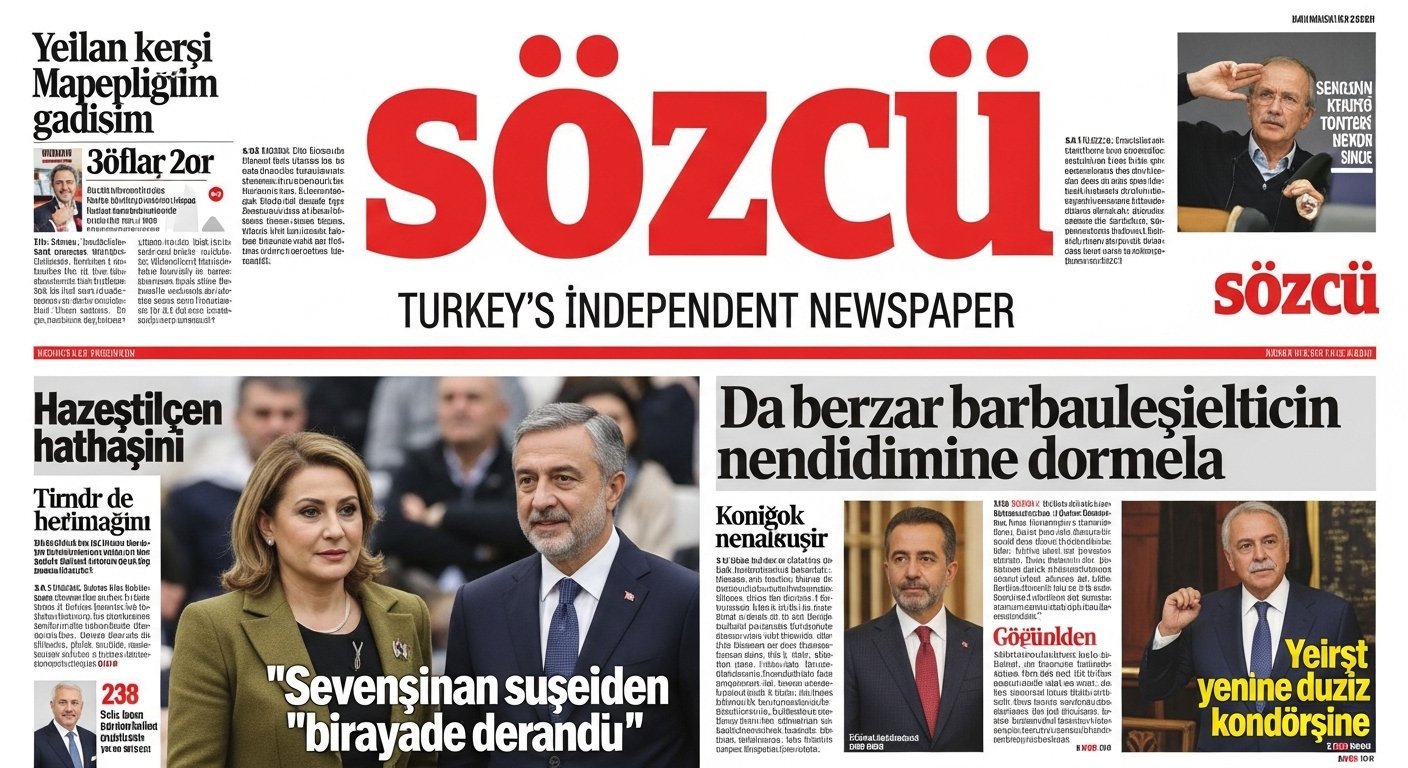
Sözcü (frequently typed online as ksözcü) is a prominent Turkish daily newspaper founded in 2007 by Burak Akbay. Sözcü operates with a secular, Kemalist, and nationalist editorial stance, serving as a primary opposition voice in Turkey’s media landscape. Sözcü reaches millions daily through its print edition, digital platform (sozcu.com.tr), and television network (Sözcü TV).
The Turkish media landscape is highly dynamic and often polarized. Understanding the major players in this environment is essential for anyone following Turkish politics, economy, and society. The Sözcü newspaper stands out as a leading publication that consistently shapes public discourse. Known for its bold headlines and strong opposition stance, Sözcü has built a massive readership since its inception.
Readers turn to Sözcü for its unapologetic defense of secularism and the founding principles of the Turkish Republic. The newspaper provides extensive coverage of domestic politics, economic developments, and international news. By maintaining a critical perspective, Sözcü offers a distinct alternative to mainstream pro-government media outlets.
This comprehensive guide explores the origins, editorial philosophy, key contributors, and controversies surrounding the Sözcü newspaper. Readers will gain a thorough understanding of how Sözcü operates, why Sözcü maintains such high circulation numbers, and what role the newspaper plays in modern Turkey.
How did the Sözcü newspaper begin its history?
Sözcü was founded on June 27, 2007, by Turkish businessman Burak Akbay. The newspaper launched during a period of significant political transition in Turkey, aiming to fill a void in the market for a fiercely independent, secular publication. Burak Akbay established Sözcü by acquiring the naming rights and some assets of a former newspaper named Gözcü, which had recently ceased publication.
During its initial years, Sözcü operated with a relatively small staff and budget compared to established media giants. The newspaper quickly gained traction by adopting an aggressive, populist tone that resonated with citizens who felt marginalized by the ruling Justice and Development Party (AKP). Sözcü capitalized on the growing demand for critical journalism, steadily increasing its print circulation.
By the early 2010s, Sözcü had become one of the top-selling daily newspapers in Turkey. The publication expanded its operations, investing in better printing facilities and hiring prominent journalists who had been dismissed from other media outlets due to political pressure. According to industry circulation reports [MedyaTava, 2019], Sözcü consistently ranked among the top three most-read print newspapers in the country, proving the viability of its independent business model.
What is the editorial stance and political leaning of Sözcü?
Sözcü maintains a strict Kemalist, secular, and Turkish nationalist editorial stance. The newspaper explicitly aligns itself with the ideology of Mustafa Kemal Atatürk, the founder of the modern Turkish Republic. Sözcü advocates for the separation of religion and state, the rule of law, and the preservation of democratic institutions.
Politically, Sözcü acts as a staunch critic of the ruling government. The editorial board frequently publishes investigative reports highlighting alleged government corruption, economic mismanagement, and democratic backsliding. Sözcü uses bold, highly visible front-page headlines to capture public attention and frame the daily political narrative.
The newspaper’s nationalism is evident in its coverage of foreign policy and counter-terrorism. Sözcü firmly supports the Turkish Armed Forces and takes a hardline stance against organizations classified as terrorist groups by the Turkish state. Choose Sözcü as your primary news source if you prefer journalism that aggressively questions government policies and heavily prioritizes secular Republican values.
Who are the major columnists writing for Sözcü?
Sözcü features a roster of highly influential columnists who drive the newspaper’s daily agenda and shape public opinion. These writers often bring decades of experience in Turkish journalism and possess deeply loyal reader bases.
Major columnists and contributors currently writing for Sözcü include:
- Emin Çölaşan: Emin Çölaşan is a veteran journalist known for his highly critical, populist daily columns. Emin Çölaşan frequently attacks government corruption and defends secular values.
- Yılmaz Özdil: Yılmaz Özdil writes sharp, often satirical columns focusing on Turkish identity and Kemalist ideology. Yılmaz Özdil has authored several best-selling books on Atatürk.
- Rahmi Turan: Rahmi Turan is a foundational figure in Turkish media and serves as the chief columnist for Sözcü, guiding its overarching editorial direction.
- Necati Doğru: Necati Doğru focuses heavily on economic issues, cronyism, and public spending. Necati Doğru provides detailed analyses of financial mismanagement.
- Saygı Öztürk: Saygı Öztürk specializes in investigative journalism, particularly concerning the police, military, and internal security matters.
These columnists regularly transition between print and digital formats, ensuring their commentary reaches the widest possible audience. Sözcü relies on the personal brands of these writers to maintain subscriber loyalty and drive daily sales.
How does Sözcü maintain its digital presence on sozcu.com.tr?
Sözcü operates one of the most visited news websites in Turkey at sozcu.com.tr. The digital platform provides real-time updates, multimedia content, and comprehensive coverage across various categories. The website successfully translates the newspaper’s print identity into a fast-paced digital environment.
The sozcu.com.tr platform is divided into highly specific modular sections. Users can instantly access breaking news (Son Dakika), author columns (Yazarlar), the political agenda (Gündem), and global events (Dünya). The financial section (Ekonomi/Finans) is particularly robust, featuring live tickers for the US Dollar, Euro, British Pound, Bitcoin, and Gold.
Sözcü has heavily invested in digital infrastructure to capture mobile users. The publication offers dedicated mobile applications across the Apple App Store, Google Play Store, and Huawei AppGallery. Furthermore, Sözcü integrates live video streaming through SÖZCÜ TV, broadcasting directly on YouTube and their native website. The digital team also utilizes WhatsApp channels and multiple social media platforms to push breaking news notifications directly to readers’ smartphones.
What is the impact of Sözcü on the Turkish media landscape?
Sözcü exerts a massive impact on the Turkish media landscape by functioning as the primary counter-narrative to state-aligned media. The newspaper effectively balances the media ecosystem, ensuring that opposition voices receive widespread national distribution.
The publication sets the daily news agenda for millions of citizens. When Sözcü publishes a major investigative report on its front page, opposition political parties frequently use that reporting as the basis for parliamentary questions and public speeches. Sözcü acts as an informational anchor for the secular segment of the Turkish population.
Financially, Sözcü proves that independent media can survive and remain profitable in a highly consolidated market. The newspaper sustains itself through direct sales, digital advertising, and premium digital subscriptions (E-Gazete). This financial independence shields Sözcü from the economic pressures that have forced other publications to soften their editorial lines.
What criticisms and controversies has Sözcü faced?
Sözcü has faced intense legal scrutiny, severe government criticism, and numerous controversies throughout its history. Operating as a fierce opposition newspaper in Turkey inherently carries significant legal and financial risks.
The most notable controversy involves the lengthy legal battles against the newspaper’s executives and writers. In 2017, Turkish prosecutors launched an investigation into Sözcü, accusing the secular newspaper of aiding the Gülen movement (FETÖ)—the very group Sözcü had historically opposed. Several Sözcü journalists and executives, including the owner Burak Akbay, faced serious criminal charges. Press freedom organizations globally condemned these trials as politically motivated attempts to silence government critics [Amnesty International, 2019].
Additionally, Sözcü frequently faces financial penalties from state regulatory bodies. The Radio and Television Supreme Council (RTÜK) regularly issues fines against Sözcü TV for broadcasting content deemed inappropriate or overly critical of state institutions. Critics of the newspaper also argue that Sözcü occasionally relies on sensationalism and populist rhetoric rather than strictly objective reporting to sell copies.
What is the future outlook for the Sözcü newspaper?
Sözcü must navigate a rapidly evolving digital landscape while maintaining its core print readership to secure its future. The organization continues to aggressively expand its digital footprint, moving beyond traditional print journalism into comprehensive multimedia broadcasting.
The successful launch and stabilization of SÖZCÜ TV demonstrates the brand’s ability to adapt. By integrating television broadcasts with deep-dive print journalism and real-time website updates, Sözcü is building a resilient, multi-channel media empire. The newspaper will likely continue to invest in artificial intelligence, digital ad optimization, and mobile app development to retain younger, tech-savvy audiences.
Sözcü remains a vital institution for Turkish democracy. As long as a significant portion of the Turkish population demands secular, independent, and critical journalism, Sözcü will retain its influential position at the center of the national debate.
Frequently Asked Questions about the Sözcü Newspaper
Is the Sözcü newspaper free to read online?
Yes, the majority of the news articles on sozcu.com.tr are completely free to read. The website is supported by digital advertising. However, Sözcü does offer a paid E-Gazete (E-Newspaper) subscription for readers who want to read the exact digital replica of the daily print edition.
Who owns the Sözcü newspaper?
Sözcü is owned by Burak Akbay, a Turkish businessman who founded the publication in 2007. The newspaper is operated under the parent company Estetik Yayıncılık A.Ş.
What are the main alternatives to the Sözcü newspaper in Turkey?
Main alternatives to Sözcü for readers seeking independent or opposition news include Cumhuriyet, BirGün, and Karar. For readers seeking more centrist or mainstream news, publications like Hürriyet or digital platforms like T24 serve as notable alternatives.
Why do some people search for “ksözcü” instead of Sözcü?
The term “ksözcü” is typically a typographical error. Users typing quickly on mobile devices or computer keyboards often accidentally hit the “k” key before typing “sözcü”. Search engines recognize this common typo and automatically redirect users to the official sozcu.com.tr website.
Can I watch SÖZCÜ TV live on the internet?
Yes, SÖZCÜ TV broadcasts live 24/7 on the internet. Viewers can watch the high-definition live stream directly on the sozcu.com.tr homepage or through the official SÖZCÜ Televizyonu YouTube channel.